Why Curiosity Drives Lifelong Learning

There is a difference between learning because you have to and learning because something genuinely interests you. Most people have experienced both, and the contrast is immediate: information absorbed out of obligation tends to fade quickly, while knowledge acquired from real curiosity has a way of staying with us.
Researchers in cognitive psychology and education have spent decades trying to understand why this happens. What they have found is that curiosity does not just make learning more enjoyable — it fundamentally changes how the brain processes and retains new information.
What Curiosity Actually Does to the Brain
When we encounter something that interests us, the brain's reward circuitry becomes active in ways that are similar to how it responds to food or social connection. A study published in the journal Neuron found that when participants were in a curious state before viewing information, they showed better memory not only for that information but for unrelated material presented at the same time.
The researchers observed increased activity in the hippocampus — a region central to memory formation — during curious states. They also noticed that the dopamine system, which governs motivation and reward, was more engaged. This suggests that curiosity doesn't just open the mind; it actively prepares it to receive and hold new information.
"Curiosity recruits the reward system, and this recruitment of the reward system enhances learning." — Dr. Matthias Gruber, University of California, Davis
This has practical implications for anyone interested in self-directed learning. If you approach a subject with genuine interest — even in small doses — you are giving your brain the best conditions for retaining what you learn.
The Role of Questions in Sustaining Curiosity
Curiosity is almost always triggered by a question, not an answer. When we do not know something and become aware of that gap in our knowledge, curiosity steps in to fill it. This is sometimes called the "information gap" theory, developed by George Loewenstein at Carnegie Mellon University.
According to this framework, curiosity is most intense when we have some familiarity with a topic — enough to know that we are missing a piece — but not so much that the gap feels insurmountable. A complete stranger to a subject may feel no curiosity about it at all, while an expert may feel only mild interest in filling minor gaps. The sweet spot lies somewhere in between.

This is one reason why quizzes and structured knowledge challenges are particularly effective at stimulating curiosity. A well-designed quiz question creates exactly the kind of tension that Loewenstein describes: you encounter a topic you may partially know, a specific gap is revealed, and the drive to fill it takes over.
Informal Learning and the Curiosity Habit
Much of what adults learn after formal education is absorbed informally — through conversations, reading, observation, and exploration. Unlike the structured curriculum of school, this kind of learning has no external deadline and no required outcome. What sustains it is often curiosity alone.
People who describe themselves as lifelong learners often share a trait: they have cultivated habits that keep curiosity alive. These habits might include reading broadly across subjects, asking questions rather than making assumptions, or regularly exposing themselves to material outside their areas of expertise.
Quizzes and knowledge challenges fit naturally into this kind of informal learning practice. They require no commitment beyond a few minutes, they expose you to topics you might not have sought out on your own, and they give you immediate feedback — which itself is a powerful reinforcement mechanism.
When Curiosity Meets Challenge
One of the more interesting findings in educational research is that people learn more effectively when the material is slightly beyond their current level — difficult enough to require effort, but not so hard that the task feels impossible. Psychologist Mihaly Csikszentmihalyi called this the "flow" state: a condition of engaged, effortful attention that tends to produce deep learning.
Curiosity and challenge are closely related. When something is too easy, curiosity fades quickly because there is nothing to discover. When something is too hard, curiosity turns to frustration. The most productive learning environments are those that calibrate difficulty carefully, maintaining the tension of the information gap without pushing learners into confusion.
Building a Practice Around Curiosity
The good news is that curiosity is not entirely fixed — it can be cultivated. Research suggests that people who deliberately expose themselves to diverse subjects, ask more questions, and pursue knowledge for its own sake tend to remain cognitively sharper as they age. This is not simply because they are learning more facts; it is because the habit of curiosity keeps certain cognitive systems active and adaptive.
Starting small is often the most sustainable approach. Spending fifteen minutes exploring a new topic, reading a short article outside your usual interests, or attempting a quiz in an unfamiliar subject can be enough to maintain the habit of curiosity over time.
Nikolas Quiz is designed with this in mind. Our quizzes are not meant to be exhaustive examinations. They are entry points — brief encounters with ideas that might otherwise remain out of reach. If a quiz on ancient civilizations prompts you to spend the next hour reading about Roman architecture, or if a science question sends you searching for more information about cellular biology, then the quiz has done its job.
Conclusion
Curiosity is not a luxury of childhood. It is a cognitive and emotional mechanism that remains active throughout life, ready to be engaged by the right question at the right moment. Understanding how curiosity works — and giving it opportunities to flourish — is one of the most reliable ways to support continued learning in adulthood.
The next time you find yourself genuinely interested in something you did not know before, pause for a moment and notice what that feels like. That feeling is worth cultivating.
The Psychology of Quizzes and Memory

Most people believe that the best way to remember something is to review it repeatedly. This intuition is understandable — if you read something enough times, it must eventually stick. But research in cognitive psychology tells a different story, one that has significant implications for how we approach learning.
The evidence points clearly in one direction: testing yourself on information is substantially more effective for long-term retention than reviewing that same information passively. This principle, often called the "testing effect" or "retrieval practice," has been replicated in hundreds of studies across different age groups, subjects, and contexts.
The Testing Effect: What the Research Shows
The foundational research on retrieval practice dates back to the early twentieth century, but a landmark 2006 study by Roediger and Karpicke brought the concept to wider attention. In that study, students who studied educational texts and were then tested on them performed significantly better on delayed retention tests than students who simply studied the same texts multiple times without testing.
The effect was substantial: students in the testing condition recalled roughly 50% more material than those in the repeated reading condition after a one-week delay. This gap widened with time — the longer the delay between study and recall test, the greater the advantage of the testing condition.
What makes this finding particularly striking is that it holds even when students are tested on material they haven't yet fully mastered. Attempting to retrieve information — and failing — appears to produce learning benefits of its own. The act of searching for an answer, even unsuccessfully, creates a cognitive state that makes subsequent learning more effective.
Why Retrieval Practice Works
Several mechanisms have been proposed to explain the testing effect. One prominent theory holds that retrieval strengthens memory traces in the brain, making those memories easier to access in the future. Each time you successfully recall a piece of information, that memory becomes slightly more accessible — less likely to be displaced by competing memories and easier to retrieve under different circumstances.
A complementary explanation focuses on the concept of "desirable difficulty." Learning that requires effort is more durable than learning that comes easily. When you are forced to work to retrieve information, you process it more deeply than when you simply re-read it. This deeper processing creates stronger and more flexible memory representations.
There is also evidence that testing improves the organization of knowledge in memory. Retrieval practice may help learners identify connections between pieces of information, leading to more structured and interconnected knowledge — which is ultimately more useful than isolated facts stored in isolation.
The Role of Feedback
The effectiveness of testing is significantly enhanced when followed by accurate feedback. Knowing whether your answer was correct or incorrect — and why — appears to amplify the retention benefits of retrieval practice, particularly when learners receive feedback that explains the correct answer rather than simply marking a response right or wrong.
This is one reason why Nikolas Quiz includes explanations alongside each answer. A quiz that simply tells you whether you were correct is useful; a quiz that explains why reinforces not just the specific fact but the broader context around it. That contextual information creates hooks in memory — additional connections that make the original answer easier to retrieve later.
Spaced Repetition and the Forgetting Curve
The testing effect is closely related to another well-established principle in memory research: spaced repetition. Testing is most effective when it is distributed over time rather than massed into a single session. This is sometimes illustrated through the concept of the "forgetting curve," first described by Hermann Ebbinghaus in the nineteenth century.
Ebbinghaus documented how memory for information decays rapidly after initial learning but stabilizes with repeated review. The key insight from subsequent research is that the optimal time to review information is just before you are likely to forget it — early enough that the memory is still accessible, but late enough that retrieval requires genuine effort.
In practice, this means that a single quiz session provides a good initial test, but returning to the same material at spaced intervals — days or weeks later — dramatically improves long-term retention. The knowledge does not need to be reviewed exhaustively each time; even brief re-testing has a measurable effect.
Quizzes as a Learning Tool for Adults
Most research on retrieval practice has been conducted with students in formal educational settings. But the implications extend well beyond the classroom. Adults engaged in professional development, language learning, or self-directed education can apply the same principles.
In fact, adults may derive particular benefit from retrieval practice because their learning tends to be more self-directed and less structured. Without the regular testing that formal education provides, adults often default to re-reading and reviewing — strategies that feel productive but produce comparatively weak retention.
Regular engagement with quizzes — even brief ones, even on topics you think you know well — provides the kind of retrieval practice that sustains memory over time. It is not about performance or scores. It is about using the act of answering questions to keep knowledge active and accessible.
A Note on Anxiety and Testing
For some people, the association between quizzes and formal testing produces anxiety — a response shaped by years of school-based assessment with real consequences. It is worth distinguishing between high-stakes testing and low-stakes knowledge exploration.
Research on test anxiety shows that it tends to impair performance primarily when the stakes are high and the outcome matters. In a low-stakes environment — where the purpose is learning rather than evaluation, and where errors are informative rather than penalizing — the cognitive benefits of retrieval practice are fully available without the interference of anxiety.
Nikolas Quiz is designed as a low-stakes environment. There are no grades, no time limits that penalize you for thinking, and no record of performance that follows you anywhere. The only purpose is to give knowledge an opportunity to deepen.
How Trivia and Knowledge Challenges Stimulate the Brain
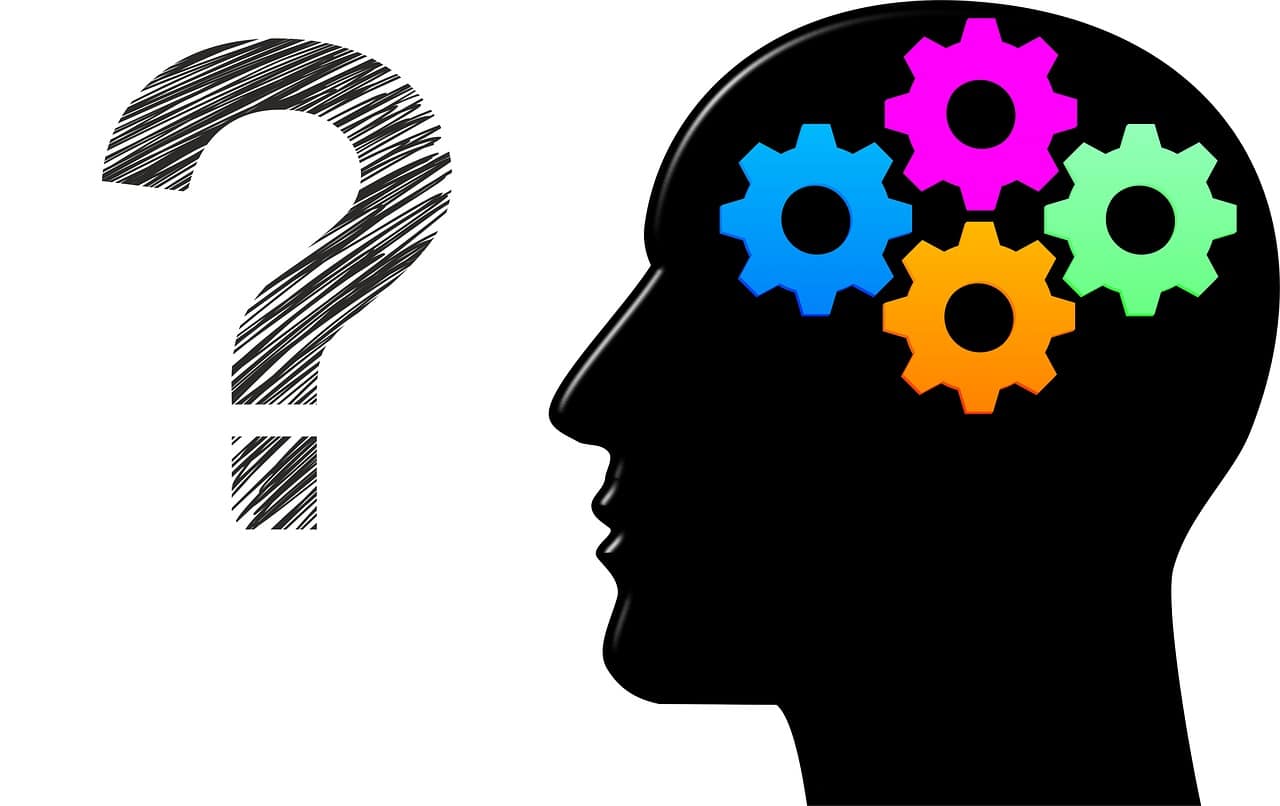
When you answer a trivia question correctly — especially an unexpected one — there is a brief, unmistakable sense of satisfaction. It is a small moment, but it is not trivial. What you are experiencing is the result of multiple cognitive systems activating in rapid succession, coordinating to retrieve, evaluate, and confirm information in a matter of seconds.
Understanding what happens in the brain during a knowledge challenge helps explain not just why trivia is enjoyable, but why it can function as a form of mental exercise with real cognitive benefits.
Multiple Cognitive Systems Working Together
Answering a quiz question is not a simple lookup operation. Even when the answer comes quickly, the brain has been working in ways that involve several distinct cognitive systems. Attention is focused and narrowed. Working memory is engaged to hold the question while processing information. Long-term memory is searched across multiple domains simultaneously. And executive functions — including decision-making and evaluation — are called upon to select among possible answers.
This coordinated activation is part of what makes trivia feel mentally engaging. Unlike passive information consumption, answering a question is an active cognitive task that demands genuine effort, even when the effort is brief.
The Dopamine Connection
The feeling of satisfaction when you get a question right has a neurochemical basis. Correctly retrieving information activates the brain's reward circuitry, triggering the release of dopamine — a neurotransmitter associated with pleasure, motivation, and reinforcement. This response is well-documented in the literature on human cognition and is closely tied to the effects of curiosity described in earlier research.
What is particularly relevant for learning is that dopamine release does not just feel good — it also reinforces the behavior that led to it. When you answer a question correctly, the brain is subtly encouraged to engage in the same kind of effortful retrieval in the future. This creates a positive feedback loop between knowledge-seeking behavior and the neurochemical reward for successful recall.
The Challenge of Near-Miss Errors
One of the more interesting aspects of trivia from a cognitive perspective is what happens when you get an answer wrong — especially when you were almost right. Research on what some call "hypercorrection" shows that people are particularly effective at learning the correct answer after a confident wrong answer.
This seems counterintuitive. One might expect that being confidently wrong would reinforce the incorrect answer. But the research suggests the opposite: high confidence in a wrong answer creates a state of cognitive surprise that makes the correct answer particularly salient and memorable. The brain, in effect, pays extra attention to the correction because the discrepancy between expectation and reality is large.
This is one reason why it matters, in quiz design, to provide clear and informative feedback rather than just marking answers as correct or incorrect. The moments of confident error are often the most valuable learning opportunities available in a quiz format.
Breadth of Recall and Cognitive Flexibility
Unlike domain-specific study, trivia and general knowledge quizzes require the brain to move rapidly between different areas of knowledge — from geography to science to literature to history — often within the span of a few minutes. This kind of broad, varied recall may offer cognitive benefits beyond those associated with deep study in a single domain.
Some researchers have drawn a parallel between this kind of varied mental exercise and the concept of "cognitive reserve" — the brain's resilience against age-related decline. While the science in this area is still developing and no single activity has been proven to prevent cognitive aging, there is reasonable evidence that mentally active lifestyles — including those that involve varied and challenging cognitive tasks — are associated with better cognitive outcomes over time.
Social Knowledge and Shared Reference Points
Knowledge challenges also have a social dimension that is often overlooked in discussions of their cognitive benefits. When trivia questions are shared — in conversation, in group settings, or simply when discussing a quiz with others — they create shared reference points and opportunities for collaborative recall.
This kind of social knowledge exchange has its own cognitive value. Explaining an answer to someone else, or hearing their reasoning for a different answer, engages elaborative processing — one of the most effective strategies for deep encoding in memory. Teaching is, in this sense, one of the best ways to learn.
A Tool for Mental Maintenance
It would be an overstatement to claim that trivia quizzes are a comprehensive cognitive training program. They are not. But as one component of a broader approach to mental engagement, they offer real value: they are accessible, varied, enjoyable, and cognitively demanding in ways that simple entertainment is not.
The brain benefits from varied activity — from being asked to retrieve, reason, evaluate, and recall across different domains. A well-designed knowledge quiz provides exactly this kind of varied cognitive demand, packaged in a format that most people find genuinely engaging.
The case for quizzes as a tool for mental maintenance is not about dramatic transformation. It is more modest and, in some ways, more reliable: a small, consistent habit of curious engagement with knowledge appears to be good for the mind — not because it trains the brain in some specialized way, but because it keeps the activity of learning alive.
That, in the end, may be the most important benefit of all.